
George H.W. Bush continued the gendered rhetoric that shaped the memory of the Vietnam War started during Reagan's presidency. In this speech, Bush dedicated the Vietnam Veterans Memorial in Dallas Texas. The theme of this speech was a discussion of how children should remember that Vietnam War as an event in history, as Bush noted that half the visitors to Vietnam War memorials were under the age of twelve. This theme was significant because it showed that this speech was an example of how the war should be both taught and remembered by the public.
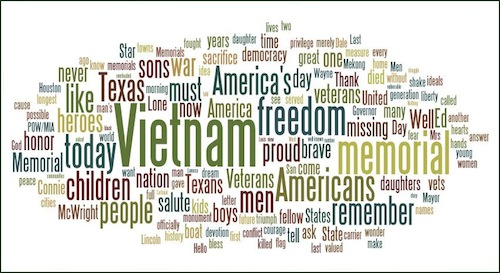
This word cloud shows how veteran sacrifice remains the focus of this speech, and that it shapes the historical teachings about the war. Some prominent words featured in the cloud are "heroes," "freedom," "memorial," and "honor." Like Reagan, Bush also demonstrates the importance of male veterans without giving much discussion about female veterans. Words like "men," "boys," and "sons" are relatively large within the cloud, while "women" and "daughters" are comparatively small.
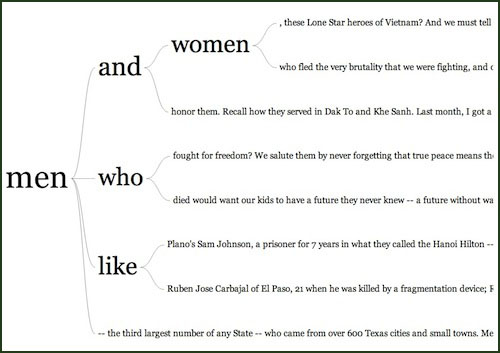
The word tree shows how Bush used the word "men" within the context of his speech. As the tree demonstrates, the word "women" is only used twice, and both times is used in conjunction with the word "men." Again, words that connote veteran sacrifice are tied to Bush's discussion of men's relationship to the war. There is still no mention of female veteran's service, which was voluntary during the Vietnam War.
Throughout the speech, Bush calls attention to the treatment of veterans upon their return back to the United States. He says that they waged a second battle for the hearts and minds of the American people, although they fulfilled their call to service. Despite that many men who served in Vietnam did so because of the draft, Bush does not discuss the fulfillment of civic duty that female veterans exemplified. Additionally, this speech was given during the debates over whether to honor female Vietnam veterans with a memorial on the National Mall in Washington, D.C., showing that although women were trying to have more recognition for their service, presidential rhetoric largely ignored this call.

Words of War by Caitlin Wolters is licensed under a Creative Commons Attribution-NonCommercial-ShareAlike 3.0 Unported License.